
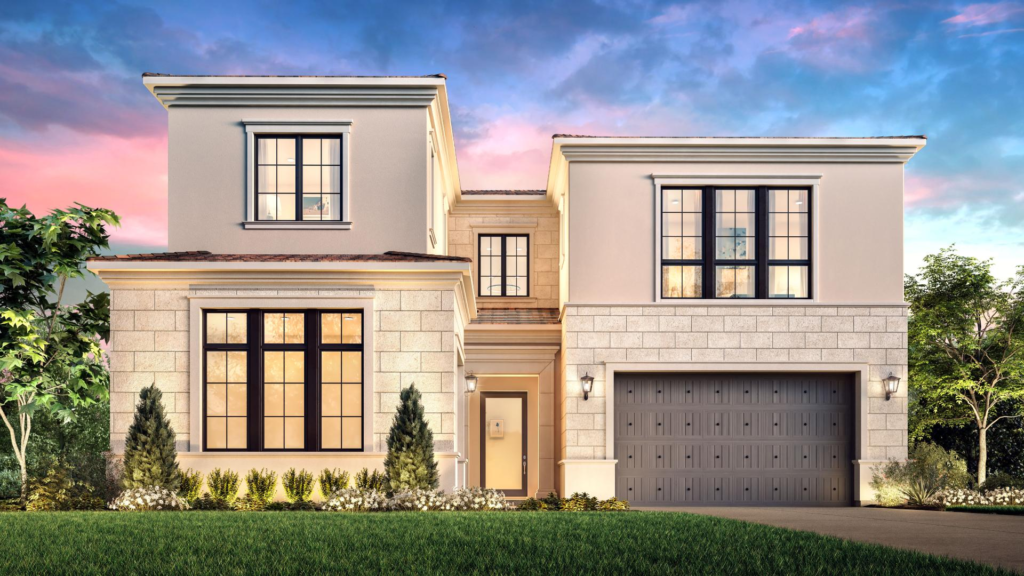
Choosing between townhomes vs single-family homes involves more than comparing asking prices. The decision also affects your monthly expenses, maintenance responsibilities, privacy, and flexibility to change the property.
Both can be appealing options in Los Angeles and Orange County. The better fit depends on how you want to live—and what the particular property actually includes.
Start with Ownership, Not Just Appearance
A townhome generally describes an architectural style: an attached residence, often with multiple floors and its own entrance. It does not, by itself, establish the legal ownership structure.
A townhome-style property may be a condominium or part of a planned development. Detached homes can also belong to an HOA. California’s Department of Real Estate identifies several forms of common-interest development, each involving shared ownership or association responsibilities. dre.ca.gov
Review the title information and governing documents to establish what you own, what is shared, and who maintains each component. Appearance alone cannot answer those questions.
Compare the Full Monthly Cost
A lower purchase price does not always produce a proportionately lower monthly expense.
Compare these items for each property:
| Expense | What to check |
|---|---|
| Mortgage | Payment based on your actual financing |
| Property taxes | Estimated taxes and applicable assessments |
| Insurance | Individual coverage and any association coverage |
| HOA dues | Amount, included services, and additional associations |
| Maintenance | Expenses you must fund directly |
| Special assessments | Approved obligations and disclosed projects |
HOA dues are generally paid separately from the mortgage payment. They still belong in the affordability calculation. Consumer Financial Protection Bureau
The CFPB recommends evaluating the total monthly housing budget, including taxes, insurance, maintenance, and association fees where applicable. Consumer Financial Protection Bureau
Maintenance: Coordination vs. Direct Responsibility
Many townhome communities coordinate some exterior or common-area maintenance. That can be convenient for owners who prefer fewer individual maintenance tasks.
However, the scope varies. Do not assume the HOA maintains the roof, windows, balcony, or plumbing simply because the property is attached. Confirm the allocation in the governing documents.
With a detached home, owners may have greater responsibility for the building and yard. That offers control over contractors and timing, but also requires planning for repairs.
Neither arrangement eliminates maintenance costs. One may collect money through dues and assessments; the other may leave more expenses to the individual owner.
Privacy, Outdoor Space, and Layout
Detached homes generally provide separation from neighboring structures, while attached townhomes share one or more walls. Actual privacy still depends on construction, spacing, windows, and outdoor layout.
During a showing, consider:
- Sound between adjoining homes.
- Window and patio sightlines.
- Private versus shared outdoor space.
- Garage access and guest parking.
- Stairs between bedrooms, living areas, and parking.
An end-unit townhome may feel different from an interior unit. A compact detached home may offer less usable outdoor space than expected. Compare the actual properties rather than relying on the category alone.
Understand Rules and Renovation Flexibility
An HOA can influence exterior changes, landscaping, parking, rentals, and other uses. Some communities also regulate interior work that affects shared systems or neighboring units.
Detached homes within an HOA may face similar restrictions. Homes outside an association remain subject to permits, zoning, easements, and other applicable requirements.
California DRE emphasizes that common-interest ownership includes important considerations that cannot be determined through a physical inspection alone. Reviewing the documents is part of understanding how you can use the property. Common Interest Dev
Financing Can Depend on the Legal Structure
If a townhome-style property is legally a condominium, the lender may need to evaluate the project as well as the borrower and unit.
Project condition, insurance, financial information, and certain litigation can affect eligibility under applicable loan guidelines. An attractive exterior and a strong borrower application do not resolve every project-level issue. selling-guide.fanniemae.com
Ask the lender to confirm the property classification and review requirements early.
Resale Depends on the Local Alternatives
Avoid assuming that every detached home will outperform every townhome.
For a meaningful comparison, examine similar properties in the same local market. Location, layout, condition, outdoor space, parking, dues, and community condition can all influence how buyers compare available homes.
A townhome may offer a location or features that would be difficult to obtain in a detached home within the same budget. A detached property may provide space and flexibility that matter more to another buyer.
The useful question is how each property competes with its realistic alternatives.
Choose the Ownership Experience You Want
A townhome can offer convenient shared amenities and coordinated maintenance. A detached home can offer greater separation and more directly controlled space.
Before choosing, identify your priorities: monthly budget, stairs, outdoor space, privacy, renovation plans, and willingness to manage maintenance.
Then compare individual properties against those priorities. The best fit is the home whose costs, responsibilities, and everyday experience work together for you.